
| Capital |
|
Dodoma |
| Official Languages |
Swahili, English |
| Population |
41,048,532
(2009 estimate*) |
| # Living with HIV/AIDS |
1,400,000
(2009 estimate*) |
| # Living with TB |
75,000
(2009 estimate*) |
| Malaria Cases |
40
(2009 estimate*) |
| *All data is courtesy of |
globalhealthfacts.org |
| Updated March 2011 |
Ministry Foreign Affairs webpage
Shortly after achieving independence from Britain in the early 1960s, Tanganyika and Zanzibar merged to form the nation of Tanzania in 1964.
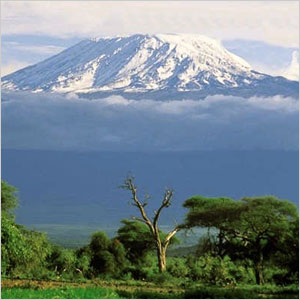
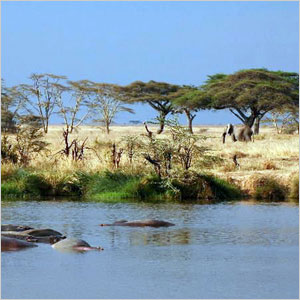
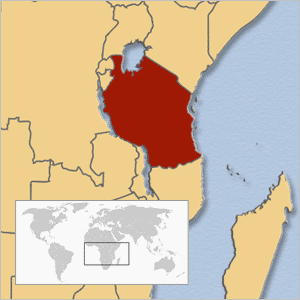
Lying just south of the equator, Tanzania is East Africa's largest country, and an immensely rewarding place to visit. Tanzania has world-famous attractions: the plains of the Serengeti, Ngorongoro Crater, snowcapped Mount Kilimanjaro (Africa's highest mountain) and Zanzibar, with its idyllic palm-fringed beaches and historic Stone Town.
Tanzania is one of the four most naturally diverse nations on earth; it contains Africa's second-largest number of bird species (around 1,500), the continent's biggest mammal population and three-quarters of East Africa's plant species (over 10,000).
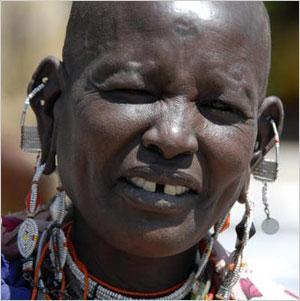
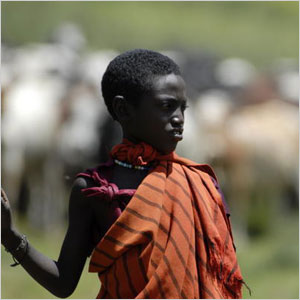
The best known tribe is the Maasai, a pastoralist cattle heading people who inhabit the region around the safari parks in the north; yet, there are at least 127 other tribes in Tanzania, perhaps not as visually colourful as the red-robed, spear-carrying Maasai warriors, but with equally rich traditions, histories, customs, beliefs and music, much of which survive despite the ravages of colonialism, modernity and Christianity.
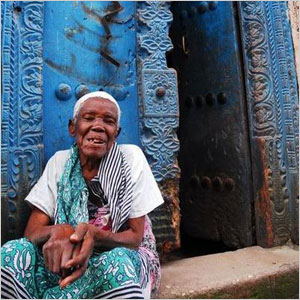
 Zanzibar / Photo by ASM
|
 |
Tanzania
LabCap Objectives
- Strengthening of the Tanzania National Health Laboratory Quality Assurance and Training Centre (NHLQATC) to establish microbiology core functions
- Strengthening microbiology services at the Zonal and Regional laboratory levels
- Assisting the Tanzanian Ministry of Health and Social Welfare (MOHSW) with the development and institution of laboratory standards and procedures
- Training Tanzanian technologists and scientists on clinical microbiology procedures, including identification of clinically relevant pathogens in HIV/AIDS patients
- Providing technical guidance for laboratory infrastructure development and procurement of specialized microbiology equipment and reagents
Program Highlights
Strengthening Microbiology Services at the NHLQATC
ASM initiated activities with a visit to Tanzania in January 2009 to meet with the MOHSW, the Centers for Disease Control and Prevention (CDC)-Tanzania, and other key stakeholders and review existing microbiology services. In the short-term, ASM is now providing support to the NHLQATC to establish the following core functions:
- Serve as public health reference laboratory for HIV/AIDS-related microbiology testing
- Coordinate networking of microbiology laboratory infectious disease surveillance and response activities
- Respond promptly to epidemics, outbreaks, and emergency situations
- Provide technical assistance and leadership in assuring quality systems integration for the laboratory network in Tanzania including coordination of external quality assurance schemes
- Provide leadership in HIV/AIDS-related laboratory training
- Train laboratory personnel in collaboration with other training institutions
- To help NHLQATC advance as a public health microbiology laboratory that conducts confirmation and surveillance of communicable diseases
This includes:
- Working with the MOHSW and CDC-Tanzania to establish a testing menu
- Assisting with the finalization of the national microbiology SOPs
- Determining equipment, reagent, and supply requirements for the laboratory
- Providing onsite refresher training on basic microbiology diagnostics and training on confirmatory and new specialized testing
- Developing outbreak capacity
- Establishing media preparation capacity
- Establishing a bank of ATCC control organisms
ASM is also focused on strengthening cross-cutting laboratory areas in the context of microbiology, such as specimen referral, reporting, biosafety, supply chain, and equipment maintenance.
Strengthening Microbiology Services for the Laboratory Network
To support this objective, ASM held a Basic Microbiology Workshop for Zonal laboratory staff in July 2010 in Dar es Salaam, Tanzania. ASM facilitators went as mentors to the five zonal laboratories - Muhimbili National Hospital, Mbeya Referral Hospital, Kilimanjaro Christian Medical Centre, Bugando Medical Centre, and Mnazi Mmoja - following the workshop for a series of mentorships. The Microbiology Zonal Mentoring Program objectives are too:
- Strengthen the technical skills of zonal laboratory staff for microbiology services
- Address quality management systems in support of accreditation goals
- Strengthen zonal hospital laboratories as referral centers
- Enhance zonal laboratories ability to provide supportive supervision to their catchment regions
- Enhance system of data collection, analysis, and reporting
- Strengthen zonal laboratories' ability to respond promptly to outbreaks and epidemics
The mentoring program has now expanded to include Regional Laboratories and will build the capacity of local Tanzanian mentors to implement and monitor the program long-term.
|